The Tapajós River in Brazil’s Amazon is one of those places that has a name in the hearts of people long before it has one on any map. The Munduruku people have fished its waters for generations. Their ancestors are buried on its banks. When the morning light touches the Tapajós, it moves through stories much older than anything written down.
In late 2025, a government decree threatened to change all that — to privatize stretches of the river, to open its waters to industrial dredging for grain export corridors. The Munduruku heard. Others heard: the Arapiun, the Apiaká, the Kayapó, the Pananá. Representatives from four river basins made their way to the port town of Santarém, gathering on ground where ancestors were buried — hundreds of people, then a thousand, then nearly two thousand. They came with love for something that already existed.
For 33 days in February 2026, they stayed. Volunteers organized food. Healers moved through the encampment. In brutal heat and uncertain weather, communities from across the Amazon cared for one another the way people do when they mean it. There were prayers and songs on earth that held the memory of everyone who had come before.
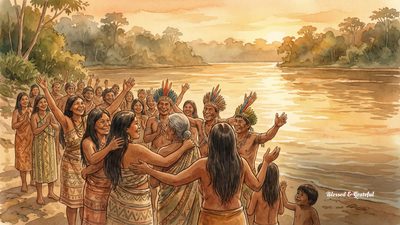
On February 23, while a ceremony was still unfolding, news came through: the government had revoked the decree. The Tapajós would not be auctioned. People jumped. They held one another. They wept — the particular tears that come when something you love is returned to you. Alessandra Korap Munduruku, who has given years of her life to this river, said what everyone was already feeling: “The river won. The forest won. The memory of our ancestors won.”
Some victories teach you something about love. Not the sentimental kind — the weight-bearing kind. The kind that holds a 33-day vigil on ancestral ground and trusts that showing up is enough. The Tapajós flows on. And so do the people who stood beside it.