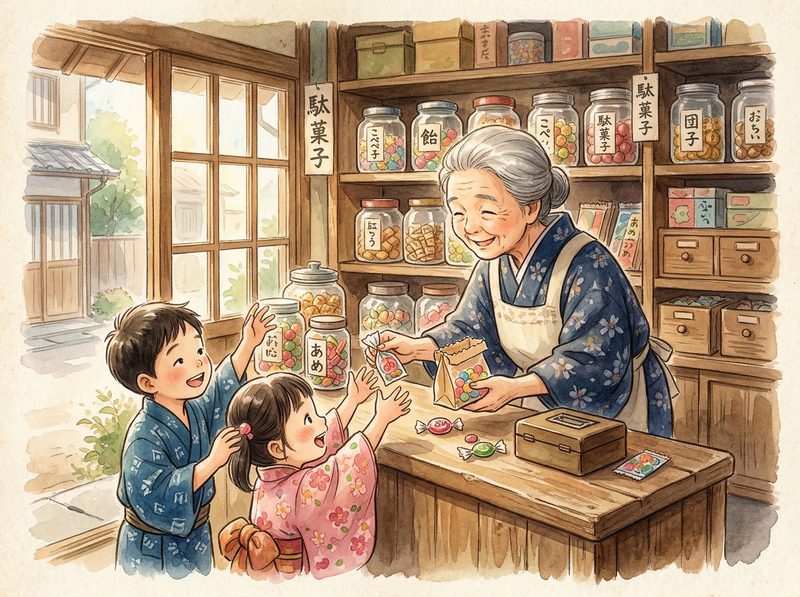
In Komae, a quiet neighborhood in western Tokyo, an 85-year-old woman named Makiko Kimura opens the door to Komamon, a small candy shop. She arranges jars. She greets children. She has done this, two or three days a week, for years now — not because she needs the money, but because this is where she feels most like herself.
"At the candy shop, I have so much fun talking to the children," she told The Japan Times. "I don't have kids of my own, so getting to interact with them is a great joy."
Makiko found this work through something called a Silver Jinzai Center — part of a nationwide network that has quietly become one of Japan's most remarkable social structures. There are more than 1,300 of these centers across the country, connecting over 670,000 older adults with part-time, community-based work. Members tend parks. They tutor students. They staff libraries, repair bicycles, teach calligraphy, fold origami at festivals. The work is gentle and the pay is modest. That's rather the point.
The Silver Jinzai system was established in 1975, when Japan recognized something that much of the world is only now beginning to understand: that retirement doesn't have to mean withdrawal. That being needed is a form of health. That when older people stay connected to their communities — not as patients or dependents, but as contributors — something good happens to everyone. Research published in BMC Geriatrics found that participants in these programs report higher life satisfaction, stronger social connections, and better physical health than peers who don't participate.
In a country where nearly 30 percent of the population is over 65, the Silver Jinzai Centers offer something that no pension or healthcare system can: a reason to get up in the morning, and someone who's glad you did. Makiko puts it simply. The children come in. She hands them sweets. They smile. She smiles. That's the whole thing. And it's enough.