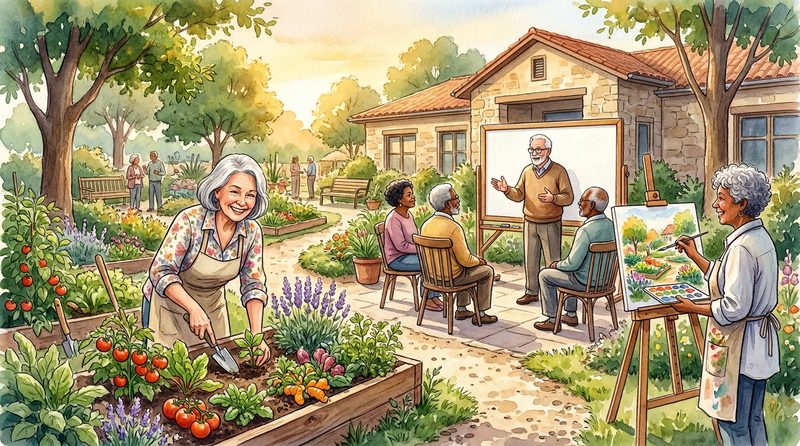
Something is shifting, slowly, in how the world talks about getting older. The language is changing. "Decline" is giving way to "reinvention." "Burden" is giving way to "experience."
Road Scholar — the not-for-profit that began in 1975 as Elderhostel — has served over 6 million adults aged 50 and older through educational travel and lifelong learning. In 2026, their "Age Well" lecture series offers free workshops on everything from navigating senior living to the neuroscience of spirituality and ageing. As they describe it: "Not the absence of limitation, but perspective, resilience, and the question — what now?"
New York City launched an Age-Inclusive Arts & Culture initiative, and participants in creative ageing programs reported "feeling rejuvenated, reclaiming long-buried artistic dreams, or reinventing themselves." Juilliard Extension now runs Lifelong Learning programs specifically for older adults, with the same artistic standards they apply to every student.
More employers are creating flexible work for people over 60. Volunteer programs are expanding — not as charity, but as purpose. The National Recreation and Park Association has developed a Healthy Ageing Framework recognising seven dimensions of well-being that parks and recreation programs can support for older adults.
In 2026, the oldest baby boomers are turning 80. They're the first generation to age with the internet, with AI, with telehealth. They're not a demographic to be managed. They're a force that's still moving.
The message, for anyone listening: experience is an asset, not a limitation.