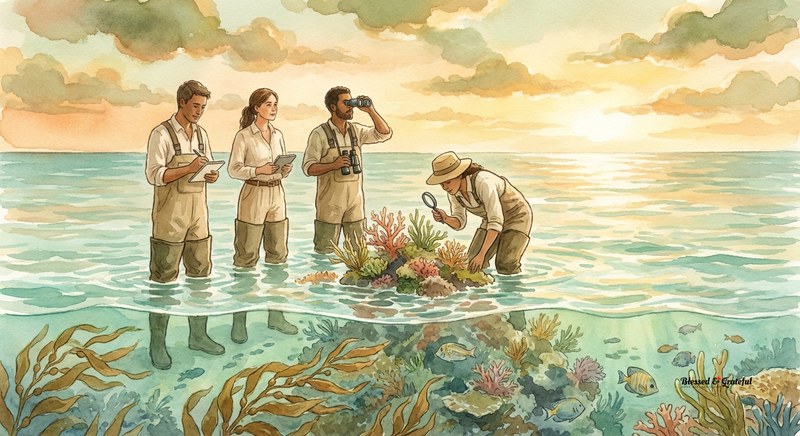
Sometime in early 2026, a threshold was crossed that marine scientists had been working toward for decades. For the first time in recorded history, more than 10% of the world's ocean — roughly 36 million square kilometres — fell within areas formally designated as protected or conserved. The announcement came from IUCN and UNEP-WCMC, drawing on the Protected Planet database that tracks these designations in near-real time. It is a number that would have been unimaginable a generation ago.
The milestone is partly the result of the High Seas Treaty, the landmark international agreement concluded in 2023 after nearly two decades of negotiation. For the first time, that agreement created a legal framework allowing nations to designate Marine Protected Areas beyond national waters — the vast stretches of open ocean that cover nearly half the planet's surface and had previously existed in a governance vacuum. As countries have begun ratifying the treaty and establishing new protections, the cumulative coverage has climbed past that symbolic 10% mark.
Not everyone agrees that the number tells the whole story. Conservation scientists have long noted that a protected area is only as good as its enforcement, and that some designated zones offer little practical protection to the species and ecosystems within them. The goal set by the Kunming-Montreal Global Biodiversity Framework — protecting 30% of land and ocean by 2030 — remains ambitious. There is real distance still to travel.
But there is also something worth pausing to acknowledge. Protecting ocean requires nations that often compete fiercely — over fishing rights, shipping lanes, mineral resources — to agree on something. It requires governments to say: not here, not us, not now. It requires scientists and diplomats and activists and coastal communities to hold a shared vision for long enough that it survives election cycles and economic pressure. That 10% exists because a great many people chose, repeatedly, to keep choosing it. The ocean does not know percentages. But the people who love it do.