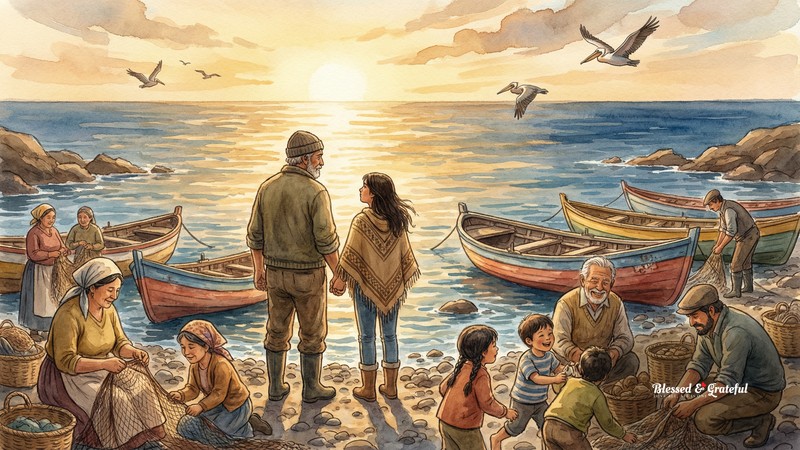
There is a small island in the Pacific, about 670 kilometres off the coast of Chile, that most people have never heard of. It is named after the fictional castaway — Robinson Crusoe — and the people who live there have been fishing the same waters, the same way, for over 130 years. They know the lobsters by season. They know when the whales pass through. They know when to stop.
That knowledge, held quietly for generations, is now the foundation of one of the largest marine protections in the history of the world. On March 10, 2026, Chilean President Gabriel Boric signed a decree granting full protection to 337,000 square kilometres of ocean surrounding the Juan Fernández archipelago — waters already loved, already tended. Combined with earlier protections, Chile now safeguards over half of its entire exclusive economic zone. It is the third-largest no-take marine area on earth, behind only the Ross Sea and Hawaiʻi's Papahānaumokuākea. And it began not in a government office, but with a community proposal.
Julio Chamorro Solís, who leads the local fishermen's organisation, put it simply: "For generations, our community has lived in harmony with the sea, relying on it for food, livelihoods, and identity." Pablo Manríquez Angulo, the mayor of Robinson Crusoe Island, described what was being protected in even more personal terms: "Our culture, our traditions, and the future of our children." These aren't the words of lobbyists or scientists. They are the words of people who were already living the answer — and finally found a government willing to listen.
The waters themselves are extraordinary. The Juan Fernández and Desventuradas archipelagos sit atop an underwater mountain chain of rare biodiversity — home to endemic fur seals, ancient lobster populations, dolphins, sea turtles, and dozens of species found nowhere else. All of it is now beyond the reach of industrial fishing and deep-sea mining. The islanders didn't just protect nature. They protected themselves, and their children, and every creature that has ever shared this stretch of Pacific with them.
There is something in this story that goes beyond policy. A small community — fewer than a thousand people — spent decades doing the quiet, careful work of living well with the ocean. And then, when the moment came, they asked for the world to honour that. And it did.