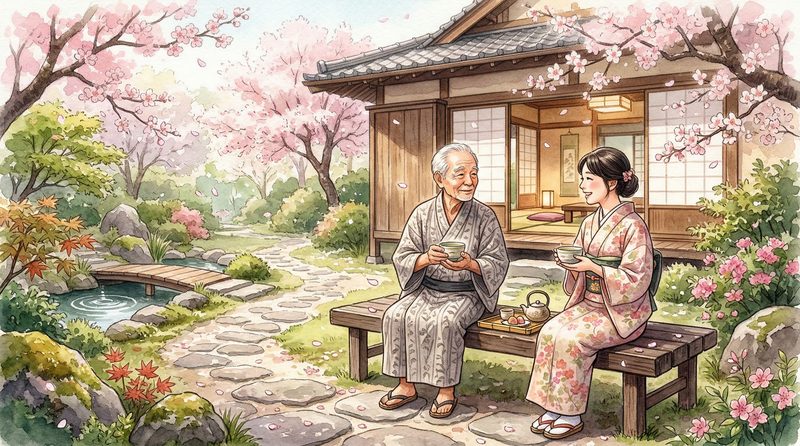
Japan became the world's first "super-aged" society in 2006, when more than 20% of its population was over 65. By 2026, that number has risen past 30%. Over 36 million people.
Instead of treating this as only a crisis, Japan is treating it as an economy. The longevity economy. Conversation partner services — people who visit elderly residents just to talk — are now a market projected to exceed 100 billion yen. Care robots are being developed not to replace human touch, but to lift, carry, and assist so that human carers can do what they do best: be present.
There are "third-age" universities for lifelong learning. Senior-focused fitness centres that have become community hubs. Companies are redesigning products — from smartphones with larger buttons and simpler interfaces to grocery stores with wider aisles and seating areas where people can rest mid-shop.
None of this is perfect. Loneliness among elderly Japanese people living alone is real and growing — over 9 million single-person households over 65. But the response is not to look away. It's to build. Japan's Ministry of Health, Labour, and Welfare has framed ageing not as decline to be managed, but as a national design challenge.
The rest of the world is ageing too. Japan just got there first — and it's showing what happens when a country decides to build for its elders instead of around them.