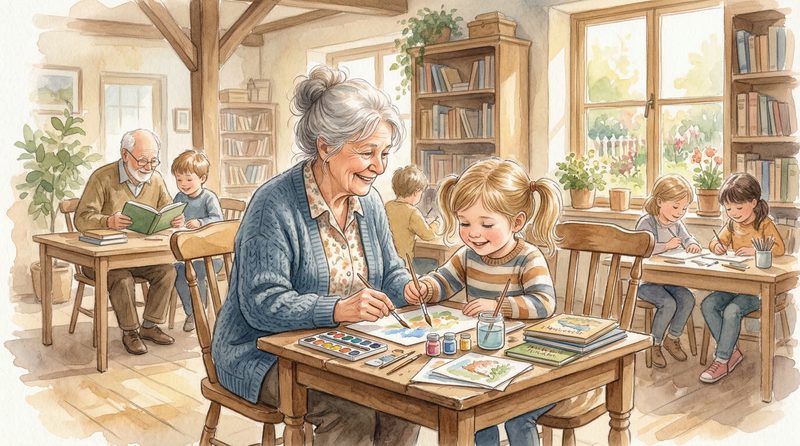
In Fairmont, Nebraska, teachers load babies and toddlers into carts and wheel them through the corridors of Fairview Manor, a nursing home. The children stop at residents' rooms, sing songs, and keep company during breakfast. They call the residents their "grandfriends."
It's called intergenerational care — and it's happening in libraries, senior centres, schools, and shared-site facilities around the world. A 7-year-old teaches a 78-year-old how to use FaceTime. An 80-year-old teaches a teenager to make bread from memory. In Des Moines, Washington, a Bezos Academy preschool operates on the campus of Wesley Homes senior living, where residents recently built the children a "mud kitchen" for outdoor play.
The research is clear: cognitive decline slows, depression lifts, loneliness fades — for both sides. The World Health Organisation reports that 1 in 4 older adults experience social isolation. Generations United, the leading advocacy organisation in this space, counts over 800 intergenerational programs across the United States. Their data shows that 92% of Americans believe intergenerational activities can help reduce loneliness.
As Donna Butts, executive director of Generations United, puts it: "It's not healthy for older adults to be shut inside their own little senior-only world." These programs don't announce themselves as a cure for loneliness. They just make the room warmer.
No special technology required. No special training. Just a table, two chairs, and a willingness to show up.