Sid Williams was nineteen years old the first time he sat down with someone who had nowhere to sleep that night. He was volunteering at a homeless shelter in Manchester, and the thing that stayed with him wasn't the cold or the statistics — it was the look on a man's face when he realized someone was actually listening.
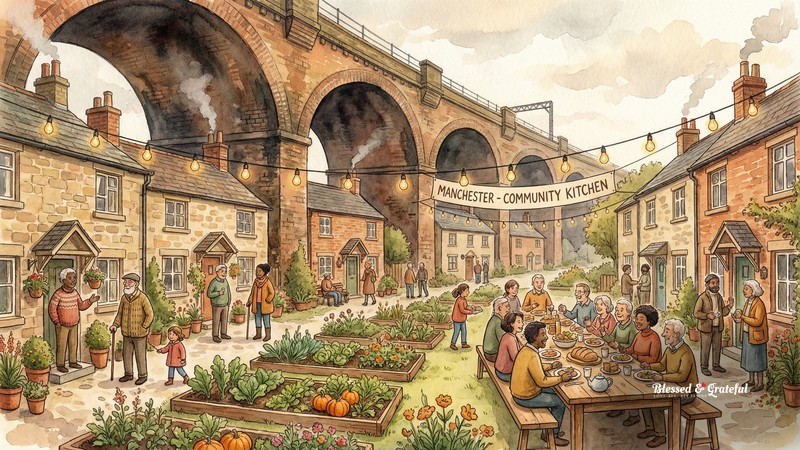
Twenty years later, Williams has built something that started as an impossible idea: a village of forty permanent homes, tucked beneath the Victorian railway arches of Castlefield in central Manchester. Embassy Village — named for the charity Williams co-founded in 2019 — opened its doors in March 2026, and it is the first development of its kind in the United Kingdom.
What makes it remarkable isn't just the architecture, though there is something quietly beautiful about homes fitted into 190-year-old brick arches. It's the philosophy. Every resident gets their own front door. Their own kitchen. Six hours of one-on-one support each week — not surveillance, but genuine accompaniment: cooking together, budgeting together, preparing for job interviews together. Twenty-two local companies have partnered to offer real employment, and seventy-five percent of previous Embassy participants who found work kept it for at least a year.
The village didn't happen because of one grand benefactor. It happened because 130 businesses donated materials, labor, and expertise. Fifty-seven volunteers designed the spaces pro bono during COVID lockdowns. The land was offered rent-free by Peel Waters. The Moulding Foundation contributed £3.5 million. Vermont Construction Group built it at no profit.
In a city where one in seventy-four people experiences homelessness and council housing wait times have doubled to fifteen years, Embassy Village is not solving the whole problem. Williams knows this. But he also knows what he learned at nineteen: that the first thing a person needs, before a roof or a job or a plan, is to feel like someone sees them.
"We're not just housing people," he says. "We are offering the chance for them to rebuild their lives."
Forty front doors. A hundred and thirty businesses. One village that began with a teenager who decided to listen.